What is Covered by Medicare in New Jersey?
Table of Contents
If you're a New Jersey resident approaching Medicare eligibility or already enrolled, one of the biggest decisions you'll face is figuring out which combination of coverage works for your situation. Medicare isn't a single plan — it's a system of interlocking parts, and the way you put them together determines what you pay and what's covered in New Jersey. This guide breaks down how the pieces fit and what New Jersey residents should consider.
Key Takeaways for New Jersey Residents
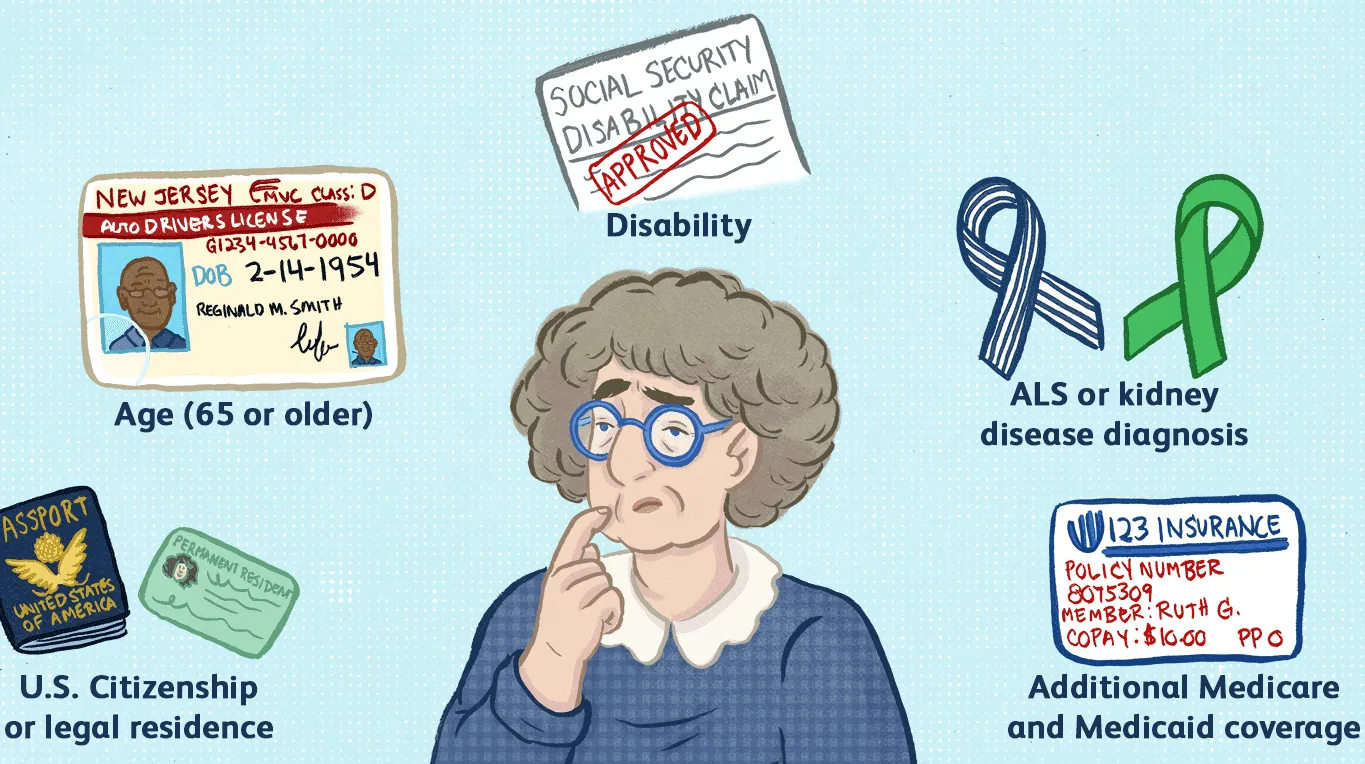
- Medicare covers New Jersey residents who are 65 or older, plus certain younger people with disabilities or End-Stage Renal Disease.
- Your first choice is between Original Medicare (often paired with a Medigap plan and a standalone Part D plan) and a private Medicare Advantage (Part C) plan available in New Jersey.
- Original Medicare has no annual out-of-pocket maximum on Part B coinsurance — a Medigap plan is what caps that exposure.
- Most Medicare Advantage plans in New Jersey bundle medical, prescription drug, and extras like dental and vision, but use a provider network that varies by county.
- Part D out-of-pocket drug costs are capped at $2,000 per year starting in 2025.
- Missing your enrollment window can trigger permanent late-enrollment penalties on both Part B and Part D.
Who Is Covered by Medicare in New Jersey?
Medicare covers New Jersey residents 65 and older, along with younger people who qualify through disability or End-Stage Renal Disease. Most people become eligible for Medicare the month they turn 65, though you can enroll a few months before or after your birthday. If you've received Social Security Disability for 24 months, you're also covered regardless of age. The rules on who qualifies don't change from state to state — but the specific New Jersey plans available to you do.
Medicare Advantage (Part C) vs. Original Medicare in New Jersey
The first decision every New Jersey Medicare beneficiary faces is choosing between two fundamentally different approaches. Original Medicare (Parts A and B) is the traditional government-run program — you can see any doctor or hospital that accepts Medicare, anywhere in the country, with no referrals needed. Medicare Advantage (Part C) bundles that same coverage through a private insurer, often adding extras like dental, vision, and hearing benefits.
The Medicare Part C plans available to you depend on where you live in New Jersey — plan options vary by county. There are several types of Advantage plans to choose from, including HMOs, PPOs, and Special Needs Plans. Many New Jersey residents are drawn to Advantage for the bundled perks and lower out-of-pocket costs, but network restrictions mean you should verify that your New Jersey doctors and hospitals are in-network before enrolling. To find out if you qualify, review the Medicare Advantage eligibility requirements.
Agents who walk people through this choice every day tend to lean on a short list of questions rather than a one-size-fits-all answer. "To help someone choose between Medicare Advantage and Medigap, I ask: frequent doctor visits or chronic conditions? Medigap. Want low monthly premiums? Medicare Advantage. Prefer predictable costs? Medigap. Want nationwide coverage and the freedom to keep any doctor? Medigap. Okay with networks? Medicare Advantage. Want drug coverage included? Medicare Advantage. Want one bundled plan? Medicare Advantage. Don't mind piecing it together? Medigap," says Craig Kirscht, a licensed Medicare agent in Colorado. For New Jersey residents, the answer comes from how you actually use healthcare — not from a generic recommendation.
Filling the Gaps in Original Medicare in New Jersey
If you go the Original Medicare route in New Jersey, you'll be responsible for deductibles, copays, and 20% coinsurance on Part B services — with no annual out-of-pocket maximum. That's where Medicare Supplement (Medigap) plans come in. Medigap coverage varies by plan letter, and pricing differs significantly depending on where you live in New Jersey.
That uncapped 20% is the part that catches people off guard. "If a Medicare beneficiary has only Original Medicare, then they could have 20% coinsurance to pay for Medicare Part B approved claims. In 2026 there is no limit to the 20% coinsurance — this could be a large amount. A Medicare Advantage plan will give you a yearly maximum out-of-pocket on the policy, giving you less liability on claims," says Andrew Zurbuch, a licensed Medicare agent in Indiana. A Medigap plan solves the same problem from the other direction by covering most of that coinsurance directly — an important consideration for New Jersey residents weighing predictability against monthly premium cost.
Timing matters. Your Medigap open enrollment period gives you guaranteed-issue rights to buy any plan regardless of health status, but that window is limited. Outside of it, New Jersey insurers can deny coverage or charge more based on your health history. According to Adam Ashby, a licensed Medicare agent in Colorado, "You should start considering these things 90 days prior to losing your employer's health plan. First of all, you get the gift of guaranteed issue for a Medicare Supplement — this is your once-in-a-lifetime opportunity to be protected by amazing coverage without the need to answer health questions. An agent cannot answer those questions in five minutes. If they do, they are putting you where they want you, not where you necessarily should be."
Prescription Drug Coverage in New Jersey
No matter which path you choose, you need to think about prescription drug coverage. Original Medicare doesn't include it, so you'll need a standalone Part D plan. Most Medicare Advantage plans in New Jersey include drug coverage built in. Either way, plans vary widely in their formularies. The old coverage gap (donut hole) works differently now: beginning in 2025, out-of-pocket costs for covered Part D drugs are capped at $2,000 per year, which puts a real ceiling on annual drug spending regardless of which plan you pick. See Medicare.gov's Part D costs page for the current rules. Drug plan pricing still varies across New Jersey, so residents in different zip codes may pay very different amounts for the same medications. You can compare plans during Part D enrollment periods.
Don't assume two plans treat the same prescription the same way. "Each Part D plan has its own specific formulary — the list of covered medications. There are also deductibles, copays, and coinsurance that factor in. Whether a particular drug counts toward your coverage gap is much more complicated than yes or no. We need to know the medication, the dosage, and the plan you're enrolled in to give a solid answer," says Mitch Anderson, a licensed Medicare agent in Minnesota. Before locking in a Part D or Medicare Advantage plan in New Jersey, check that every prescription you take is on that specific plan's formulary at a tier you can afford.
What Medicare Doesn't Cover
Regardless of how you structure your coverage, some services are excluded:
- Long-term custodial care
- Cosmetic procedures
- Care outside the U.S.
- Routine vision care under Original Medicare
- Dental coverage, which is very limited under Original Medicare
For a detailed breakdown of what each part includes and excludes, see our guide to understanding what's covered by Medicare. If a claim is denied and you believe it should be covered, you have the right to appeal the decision.
"I like to say Original Medicare only covers you from the neck down — so no glasses, no dentures, no hearing aids," says Helena Foutz, a licensed Medicare agent in California. "If you want a side of dental and vision with your Medicare, look to a Medicare Advantage plan. Many MA plans offer dental and vision, and it pays to shop around — but let your broker be your personal shopper. It doesn't cost you anything, and they know all the plans." Just be aware that "dental coverage" on an Advantage plan can mean very different things depending on the carrier — some have networks, some are limited annual allowances, and some require you to use specific dentists. New Jersey residents should read the benefit details before assuming a plan solves their dental problem.
Understanding Your Costs in New Jersey
Medicare costs aren't just premiums. Between Part A premiums and deductibles, Part B premiums, Part D premiums, copays, and coinsurance, your total spending depends on which plans you combine. For a complete breakdown of every cost component, see our guide to how much Medicare costs in 2026. It's also worth comparing plans with a financial checklist to see your real costs across scenarios. Higher income can also mean higher premiums — certain Medicare choices can affect your tax bill.
If cost is a barrier, New Jersey residents may qualify for Medicare Savings Programs that help cover premiums and out-of-pocket expenses.
Enrollment: Don't Miss Your Window in New Jersey
Most New Jersey residents are automatically enrolled when they turn 65, but there are deadlines beyond that. Missing your window can result in permanent late-enrollment penalties on both Part B and Part D. For a plain-language breakdown of how those penalties are calculated, Medicare.gov's penalty guide is the authoritative source. Make sure you understand who is eligible and how to enroll before your deadlines arrive. Avoiding common enrollment mistakes can save you money for years. Life changes like losing employer coverage may qualify you for a Special Enrollment Period. You can also make changes to your existing plan during Medicare Open Enrollment.
Putting It All Together in New Jersey
The right Medicare coverage isn't one-size-fits-all — it's a combination tailored to how you use healthcare in New Jersey. Whether that's Original Medicare plus Medigap and a standalone drug plan, or a Medicare Advantage plan that bundles everything, the key is understanding what you're getting and what you're giving up. A local New Jersey Medicare insurance agent can help you compare the specific plans available in your area at no cost.

Martin Picinic
Licensed New Jersey Medicare Agent
Contact Martin through Medicare Agents Hub »
With more than 15 years of experience in the Medicare and health insurance industry, Martin Picinic is dedicated to helping individuals navigate their Medicare options with confidence and clarity. He understands that choosing the right Medicare coverage can be overwhelming, and he takes pride in simplifying the process while providing personalized guidance tailored to each client's healthcare needs, budget, and lifestyle.
Martin specializes in Medicare Supplement (Medigap) Plans, Medicare Advantage Plans, Prescription Drug Plans (Part D), and other Medicare-related coverage options. Other coverage Martin specializes in include (Hospital Indemnity, Cancer Heart Attack and Stroke, and Short Term Care Policies. His consultative approach ensures that clients fully understand their choices so they can make informed decisions about their healthcare coverage.
Known for his professionalism, integrity, and commitment to customer service, Martin has built lasting relationships by putting his clients' needs first. Whether you're new to Medicare, turning 65, retiring, or reviewing your current coverage during the Annual Enrollment Period, Martin is committed to helping you find a plan that provides the protection and peace of mind you deserve.
Connect with Martin today to explore your Medicare options and receive expert guidance backed by 15 years of industry experience.